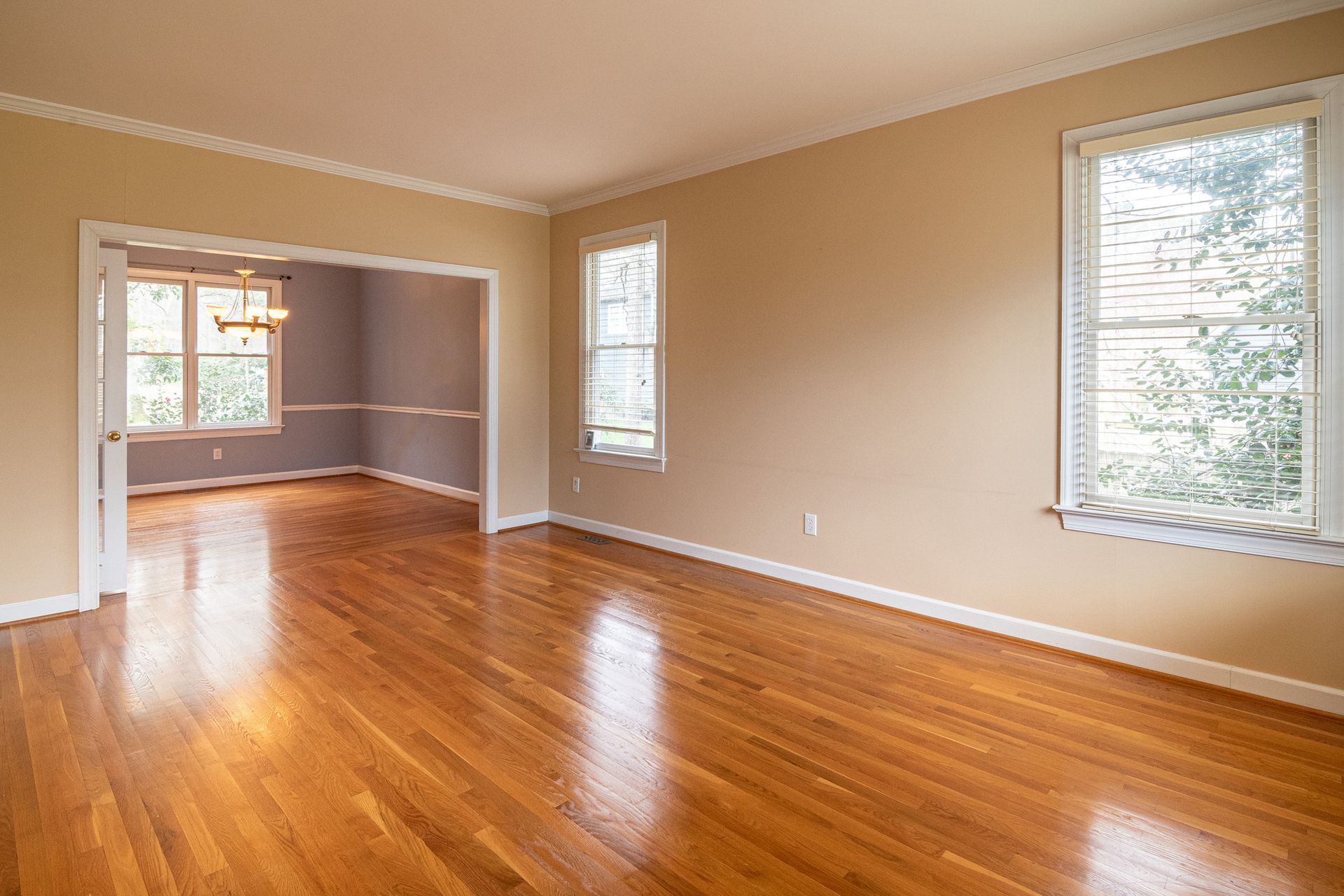
Every October in Greater Moncton, the same thing happens in house after house: the furnace kicks on, the air inside dries out, and a floor that was quiet all summer starts talking back. A step in the hallway creaks. A bedroom door that swung fine in August now drags. Usually, nothing broke overnight. Wood shrinks as it dries, and the small gaps that open up are exactly where squeaks and sticking doors come from.
Why heating season makes wood noisy
Wood moves with moisture. Through a humid Moncton summer, floorboards and door slabs swell tight against each other. Once the heat runs steadily, indoor air dries out and the wood gives that moisture back, shrinking slightly. A subfloor that sat snug on a joist now has a hair of play in it, and every footstep flexes it just enough to rub. The same drying explains why a door can feel different from one month to the next.
Older homes around Moncton, Dieppe and Riverview tend to show this first. Many were built with plank subfloors and nails rather than screws, and decades of seasonal swelling and shrinking slowly work nails loose. That does not mean the floor is failing: a squeak is, most of the time, a loose joint rubbing, not a structural problem.
Find the squeak before you fix it
Walk the floor slowly and mark each noisy spot with tape. Squeaks usually come from the finished floor rubbing the subfloor, or the subfloor lifting slightly off a joist. If you have an unfinished basement below, have someone walk upstairs while you watch from below: you will often see the subfloor flex where it has pulled away from the joist. Before drilling or screwing anything from below, check for plumbing, wiring and heating runs in the way.
Fixing it from below, when you can
From below, the cleanest fix is a repair bracket made for this job: it fastens to the side of the joist and pulls the subfloor tight as you tighten it, with no hole in your finished floor. A simpler version is a short wooden cleat screwed to the side of the joist just under the subfloor, with screws driven up through the cleat into the subfloor. A thin shim tapped gently into a gap can quiet a small spot too, but do not force it: a shim driven too hard can lift the floor and create a hump elsewhere.
Fixing it from above, when you cannot
With a finished ceiling below, work from the top. Find the joist with a stud finder; joists in most homes sit about 16 or 24 inches apart, running across the floorboards. Snap-off screw kits drive a scored screw through the floor into the joist, then the head snaps off just below the surface, leaving a small hole you fill with matched wood filler. Measure your floor layers first and pick a screw that cannot poke through the finished surface, and drill a pilot hole in hardwood so it does not split. Powdered graphite worked into board seams can quiet boards rubbing each other, but it is only a stopgap for a subfloor that has pulled away from a joist.
The sticking door: hinges first, plane last
A sticking door follows the same rule: start with the least permanent fix. Tighten every hinge screw first, because loose hinges are the most common cause. If a screw spins without biting, pull it out, pack the hole with toothpicks coated in wood glue, let it dry, and drive the screw back in. For a sagging door rubbing at the top corner on the latch side, swapping one short screw in the top hinge for a longer one that bites into the framing behind the jamb often lifts the door back into place.
Only when the hinges are solid and you know exactly where the door rubs should you remove wood. Mark the contact point, take off a little at a time, and test often: wood you plane away does not come back, and a door trimmed while swollen will rattle once the air dries. A door that stuck all summer may free itself as the house dries, so a slightly tight door is worth a few weeks of steady heating before cutting anything. Seal any bare edge you do trim, or it will swell again next summer.
One squeaky board is maintenance, but a whole floor that has suddenly gone noisy, several doors in the same part of the house sticking at once, new cracks around door frames, or a floor that slopes noticeably can point to movement in the house itself. Get the cause looked at first.
Fix what you can reach, leave the seasonal ones until they settle, and the house will be quieter by first snow in Moncton.