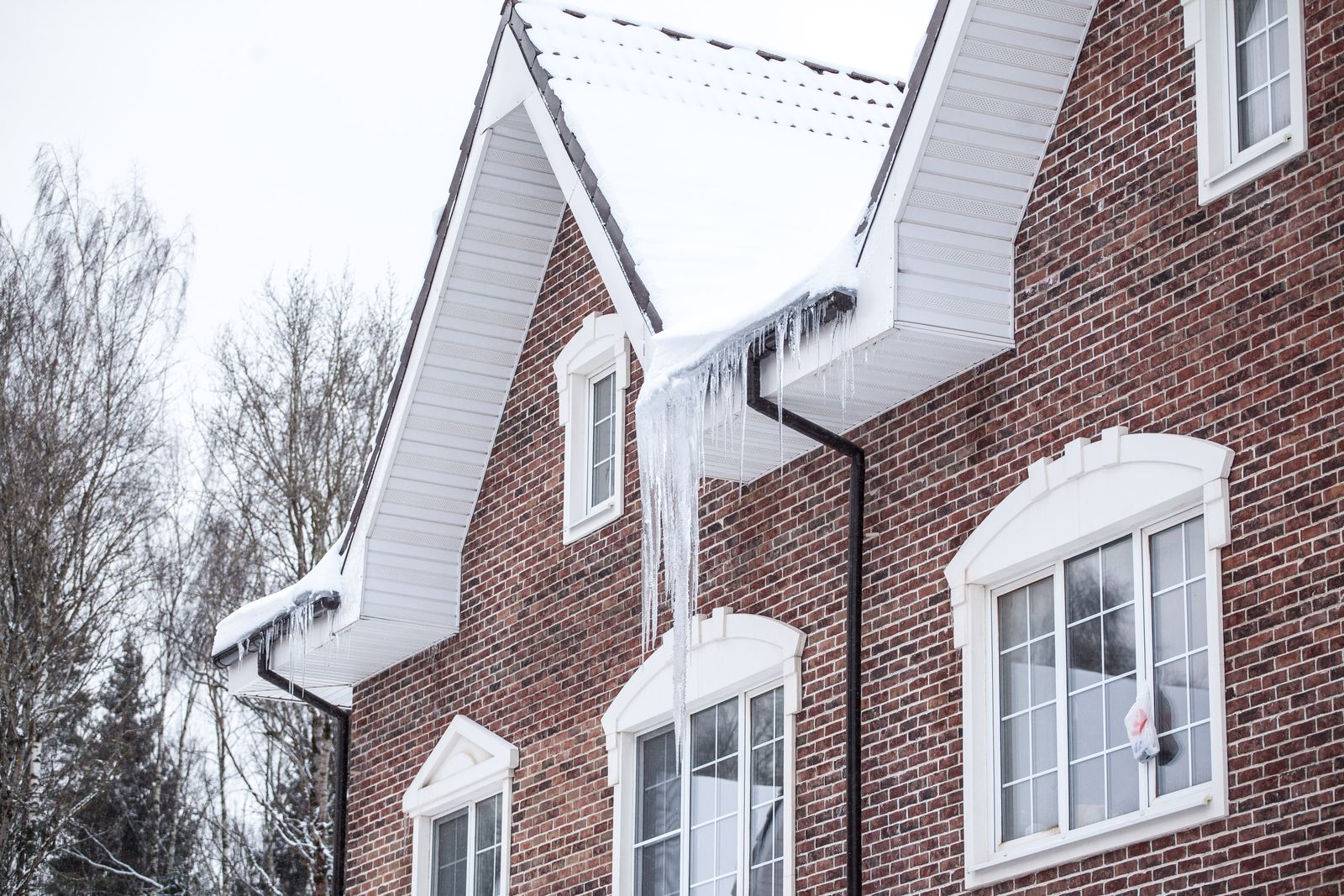
Every January in Greater Moncton, the same thing happens: a row of icicles appears along somebody's eaves, pretty as a postcard, and a few weeks later there is a brown stain on the upstairs ceiling. That is not bad luck, and it is not just the weather. It is an ice dam, and it starts inside your house, not on your roof.
How an ice dam actually forms
An ice dam needs three things, and a Moncton winter supplies all of them: snow on the roof, a warm spot on the roof deck, and freezing air at the eaves. Heat escaping from your living space warms the attic, which warms the middle of the roof. Snow there melts from underneath, and the meltwater runs down to the eave, the part past the outside wall that nothing warms, where it refreezes layer after layer into a ridge of ice.
That ridge is the dam. The next melt pools behind it and creeps back up under the shingles, soaking the roof deck and the ceiling below, because shingles shed water running downhill, not water pushing uphill.
The questions every homeowner asks
Homeowner forums in late fall ask the same four questions again and again. Here are answers.
Do icicles mean I have a leak? Not necessarily. A few small icicles after a sunny thaw are normal. Worry when ice keeps returning to the same stretch of eave every winter, when snow there melts much faster than on your neighbours' roofs, or when you see soffit stains or peeling paint under the eave. That pattern says heat is escaping there.
Will heat cables fix it? Heat cables can keep a drainage channel open, and for a roof you cannot safely reach, they are a reasonable stopgap. But they treat the symptom, not the cause, and they cost money to run all winter. Use them as a bandage while you plan the real fix.
Should I just knock the ice off? Please do not. Climbing onto an icy roof is dangerous, and hacking at a dam with an axe or ice pick damages shingles and gutters and can make the leak worse. A roof rake used from the ground, pulling snow off the first few feet above the eave, is the safe move; a plastic or aluminum blade is kinder to shingles than steel.
Will adding more vents solve it? Ventilation helps, but on its own it rarely cures a dam. Canada Mortgage and Housing Corporation's guidance says the same: the basic relief is to seal attic air leaks and insulate thoroughly. If warm air still pours in through gaps around light fixtures, vents, chimneys, and the attic hatch, extra vents just give it a faster exit. Seal first, insulate second, then check the vents you have are not blocked.
The fix that actually lasts
The lasting fix is the attic trio, in this order. First, air sealing: close the gaps in the attic floor where warm, moist house air leaks upward. This is the single most effective step, and the one most often skipped. Second, insulation: cover the attic floor evenly, without shoving it into the eaves where it blocks soffit vents. Third, ventilation: cold air in at the soffits, out near the ridge, keeping the roof deck close to outdoor temperature so snow stays put.
Two smaller jobs matter too: make sure bathroom and kitchen fans and the dryer vent outside, not into the attic, and keep eavestroughs and downspouts clear so thaw water has somewhere to go.
What to do before the snow settles
- Look for last winter's trouble spots: stained soffits, peeling paint under the eaves, gutters pulling away from the fascia.
- Check that the attic hatch closes tightly and is insulated on the attic side. An unsealed hatch is a chimney straight into the attic.
- After the first real snowfall, glance at your roof from the street. If your snow melts in patches while the neighbours' roofs stay white, that patch is where your heat is going.
- Buy or borrow a roof rake now, before the first big storm, so you are not shopping for one in a blizzard.
💡 If water is already coming in
Put a bucket under the drip and photograph the stain. As a short-term measure, a sock filled with calcium chloride laid across the dam can melt a narrow drainage channel. Do not use rock salt, and do not climb up to chip at it.
Much of Moncton's older housing stock was built with thinner attic insulation than a modern home, which is why ice dams return here year after year. The fix is unglamorous, and usually far cheaper than repairing a ceiling in the spring. Sort the attic this fall, and those icicles can stay a postcard instead of becoming a repair bill.