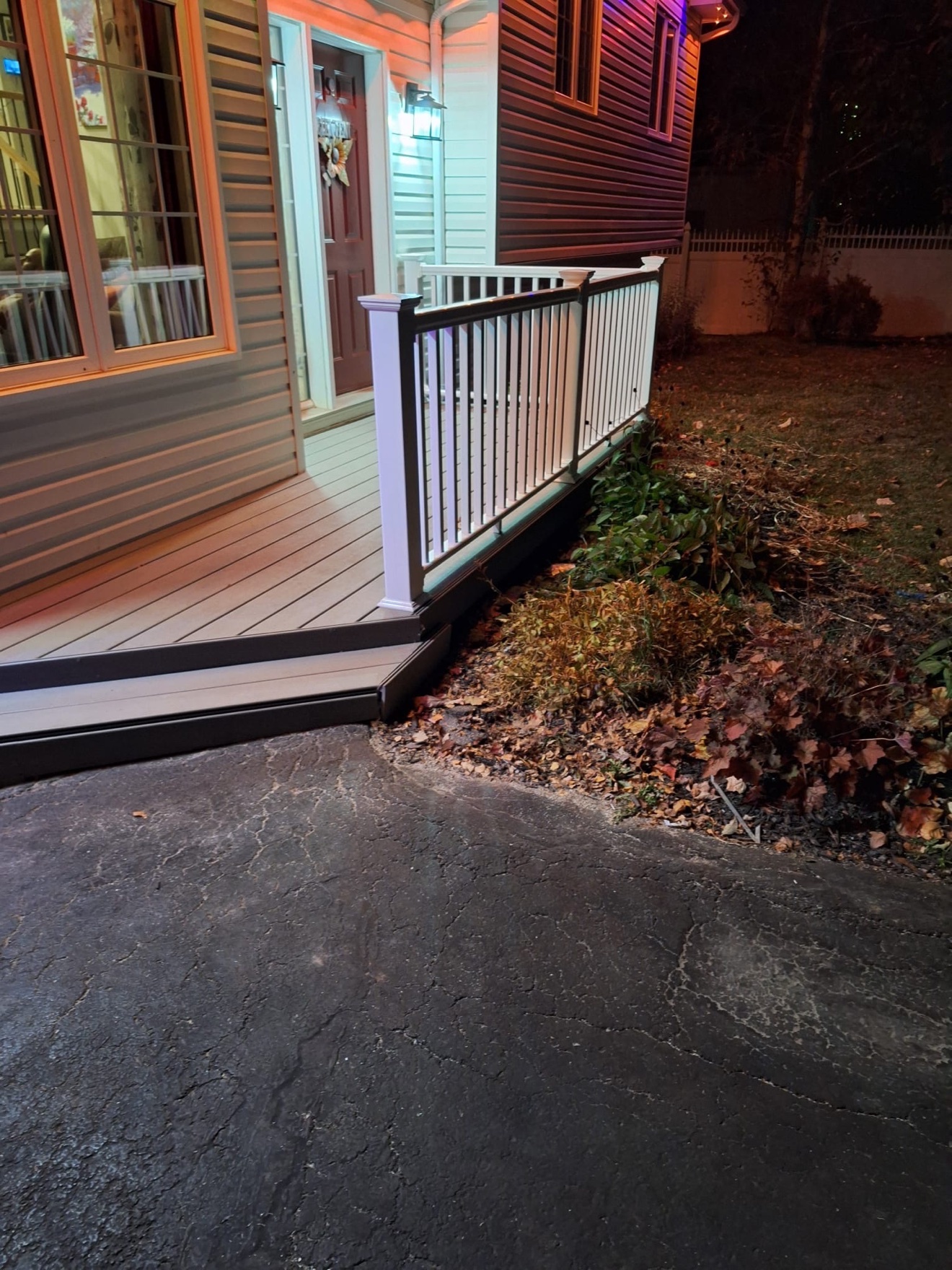
Late October is the last easy weekend to look after your deck in Greater Moncton. Once snow starts piling up, the leaves, the loose board and the railing you meant to tighten are buried until spring, and months of freeze, thaw and meltwater will work on every weak spot they find.
Clear everything off, then clear the gaps
Start by taking everything off the deck: furniture, planters, the barbecue, the kids' toys. Anything sitting on the boards traps moisture underneath it all winter, and a planter left in place can leave a damp ring that stains and softens the wood. Store cushions indoors and cover anything left outside with a breathable cover, not a tight plastic tarp, which only holds condensation against the surface.
Then sweep properly, including between the boards. A mat of wet leaves holds water against the wood, feeds mould, and blocks the gaps that let water drain through. In Moncton, Dieppe and Riverview, where leaves come down fast and wet snow often follows soon after, that trapped layer is a common reason a deck comes out of winter looking blotchy and tired. A stiff broom and a narrow scraper for the gaps will do most of the work.
Wash it while you can still let it dry
If the surface is grimy, wash it with a deck cleaner made for your deck material and rinse it well. Wood and composite decks do not want the same products, so check the label. Pick a mild day: the boards need time to dry completely before the cold sets in, so do not wash the deck the afternoon before a frost is forecast.
Inspect it like winter will: board by board
Walk the deck and test it the way snow and ice will. Step on every board and listen for movement. Look for boards that are split, cupped or soft underfoot, fasteners that have worked their way up, and any spongy spot, which can mean rot has started underneath. Tighten what is loose, replace a damaged board, and drive down any raised fastener now. A raised screw head that catches a shovel in January will tear up a board in one pass.
Then check the parts that keep people safe. Grab each railing post and push it: a railing that wobbles in October will not get steadier under a winter of leaning snow. Check the stairs the same way, including treads and handrail, and look underneath at posts and footings where they meet the ground. A footing that has heaved is worth fixing before the ground freezes solid.
If you can get underneath, look at where the deck meets the house. That ledger connection is the most important joint on the whole structure, and it is often hidden behind stored lumber. Look for water staining on the house wall, gaps, or rusted or loose fasteners. If anything about that connection looks wrong, have it looked at by someone who does this work before winter adds its weight to it.
Do the water test before you reseal
For a wood deck, splash a little water on the boards in a few places. If it beads up, the finish is still doing its job. If it soaks straight in and darkens the wood, the sealer has worn through and the boards will drink up meltwater all winter. Resealing needs a dry stretch to cure, which is why late October is the deadline, not the starting point. Apply it on a dry, mild day, follow the product's temperature directions, and do not seal over a damp or dirty deck. Composite decking does not need sealing the same way, but its gaps still clog and its railings still loosen, so do not skip the rest of the checklist.
💡 Clearing snow the deck-friendly way
Use a plastic shovel, working with the direction of the boards, not across them. Skip rock salt on a wood deck: it can damage the finish and hardware, and its meltwater refreezes in the gaps. A calcium or magnesium chloride product, used sparingly where you walk, is gentler, and sand gives grip without the chemical load.
Set it up so spring is easy
Finish by thinking about drainage. Clear the eavestroughs above the deck and make sure downspouts carry water away from the footings. Move anything stored underneath that blocks airflow, and trim back any branch over the deck: a limb loaded with wet snow is heavier than it looks.
A deck that goes into a Moncton winter clean, tight, dry and well drained comes out ready for the first warm evening in spring. One that goes in covered in leaves, with a loose railing and a worn-out finish, comes out needing boards, stain and repairs that cost far more than an afternoon in late October.