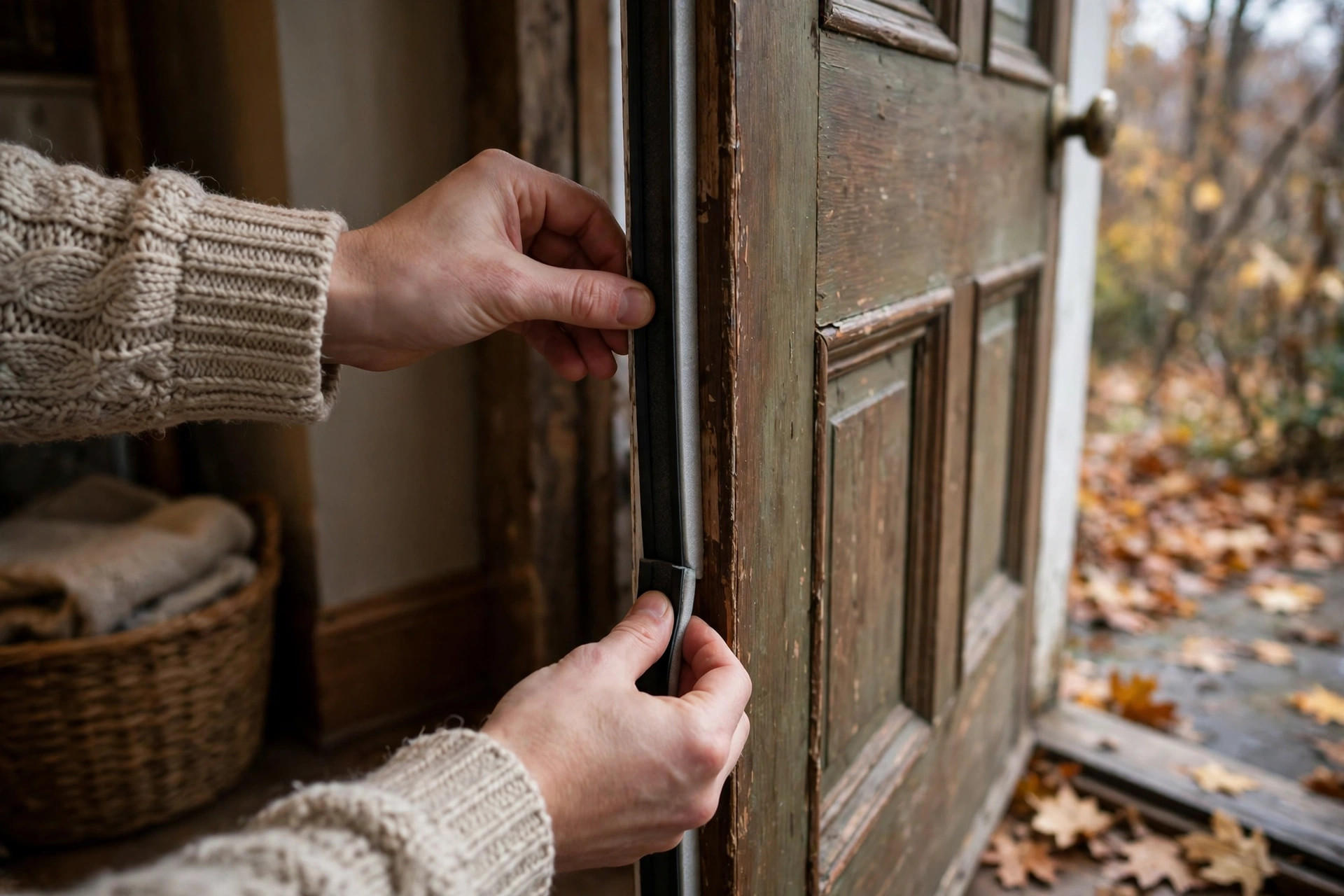
Late October in Greater Moncton is the sweet spot for draft-proofing: cold enough that you can actually feel where the air is getting in, but still mild enough to work comfortably around the outside of the house. A roll of weatherstripping, a tube of caulk and an afternoon are often all it takes to make a home noticeably warmer all winter.
Why drafts hit Moncton homes so hard
A lot of homes in Moncton, Dieppe and Riverview were built before airtight construction was the norm, and decades of freeze-thaw cycles wear down the seals around doors and windows. Every gap is a small, constant leak: cold air comes in, warm air goes out, and your heating system runs longer to keep up. Natural Resources Canada puts space heating at about 61% of a typical Canadian home's energy use, so anything that keeps heated air inside pays off all winter long. In a province where many homes heat with electric baseboards or a heat pump, that extra running time shows up directly on the NB Power bill.
Drafts are also a comfort problem, not just a money problem. The rooms with the worst seals — often a front entry or a living room with older windows — end up a few degrees colder than the rest of the house, and no thermostat setting fixes that evenly.
Find the leaks first
Start with the simple hand test recommended in NB Power's winter checklist: on a cool, windy day, hold your hand a few centimetres from the edges of each door and window frame. If you feel cool air moving, you have found a leak worth sealing. Check the bottom of exterior doors and the corners of frames, where seals fail first.
A second easy check works at night: have someone shine a flashlight from outside around a closed door while you stand inside in the dark — light coming through means air is coming through. On windows, look for daylight around the sash, and check the caulk outside for cracks, gaps or sections that have pulled away from the frame.
Doors: the biggest single win
Exterior doors usually leak the most, and they are the easiest to fix. Foam tape weatherstripping is cheap and works well on most door frames, while V-strip (tension seal) lasts longer on doors that get heavy daily use. If you can see daylight under the door, add a door sweep to the bottom — it takes a few screws and stops one of the worst drafts in the house. Check the threshold too: an adjustable threshold can be raised slightly with a screwdriver so it meets the sweep properly.
Do not forget the door between the house and an attached garage, or a basement walkout door. Those are exterior doors as far as your heating bill is concerned, even though they do not feel like it.
Windows: caulk outside, weatherstrip inside
Outside, re-caulk any cracked or missing sealant around window frames, working on a dry day when the temperature is above freezing so the caulk cures properly. Small gaps can be caulked directly; larger gaps need a foam backer rod pressed in first, then caulk over top.
For windows that are stiff, painted shut or rarely opened, clear plastic window film is a good one-season fix: stretched over the frame and shrunk tight with a hair dryer, it adds an insulating air pocket for very little money. Just do not seal shut the one window in a bedroom that serves as an emergency exit — building codes require every bedroom to have a window that opens from the inside.
💡 Work top-down, outside-in
Seal the upper floors and attic hatch first if you can, then work down to the main floor doors and windows. Warm air rises and escapes high in the house, pulling cold air in low — so stopping the leaks at the top makes the fixes at the bottom work better.
What not to seal
A house still needs to breathe. Do not block vents, dryer exhausts, furnace or water-heater flues, or the combustion-air openings that fuel-burning appliances need. If a room has a gas or oil appliance, leave its air supply alone and get a professional to look at it if you are unsure. And if you find rot, soft wood or mould around a frame while you are working, that is a repair job, not a caulking job — the frame needs attention before any seal will hold.
Done right, draft-proofing is one of the best returns on effort in home maintenance: low cost, no special tools, and a warmer house from the first cold snap. Walk your home with a roll of weatherstripping this week, before the real Moncton winter arrives.