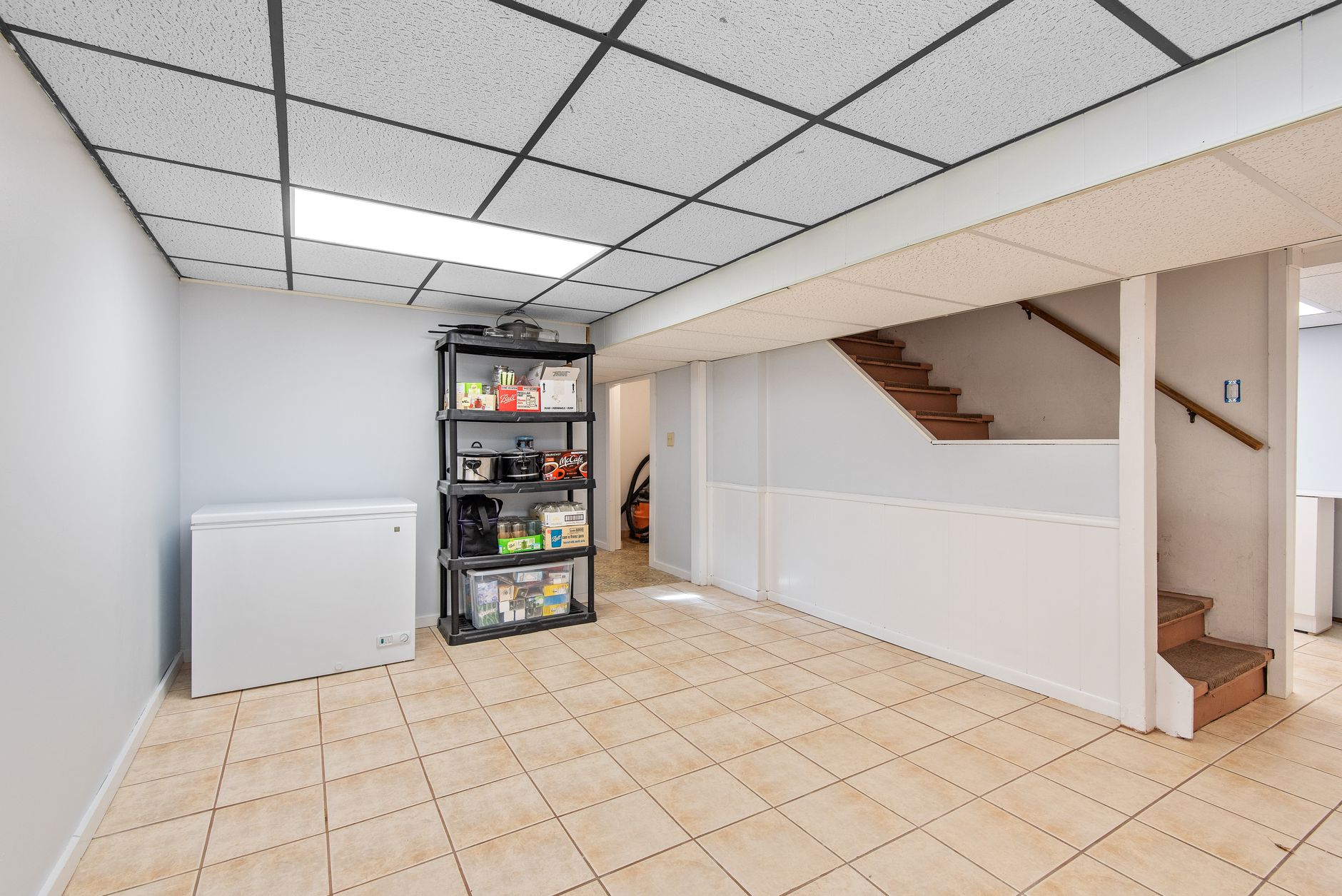
Late October is basement season in Greater Moncton. The first hard frosts are not far off, and the basement is where winter problems usually start: a sump pump that quits during a storm, a pipe that freezes along an outside wall, a crack that lets in cold air all winter. An afternoon down there now can save you a flooded floor in January.
Test the sump pump before you need it
If your home has a sump pump, it is the hardest-working piece of equipment in the basement and the easiest to forget. Pour a bucket of water into the pit and watch: the float should rise, the pump should kick on, drain the pit, and shut itself off. Listen for grinding, and check the float moves freely.
Then walk outside and look at where the discharge pipe ends. It should slope downhill and carry water well away from the foundation. A discharge line that ends right beside the house sends the same water back toward the basement, and a short, flat section of pipe can freeze solid in a cold snap. Clear leaves from the outlet and wrap any exposed pipe with foam insulation before the first real freeze.
Insulate the pipes that freeze first
The pipes most likely to freeze are the ones you barely think about: water lines running along an outside wall, through an unheated crawl space, or near the rim joist where the foundation meets the floor framing. In older Moncton, Dieppe and Riverview homes, those runs often have little or no insulation, and a single cold night is enough to stop them.
Foam pipe sleeves are cheap, sold at any hardware store, and slide on in minutes. Cover both hot and cold lines, because a hot water line that sits unused can freeze just as easily. On the coldest nights of the year, opening the cabinet doors under kitchen and bathroom sinks lets warm room air reach the plumbing, and letting a faucet on an outside wall drip slowly keeps water moving instead of sitting still and icing up.
Seal the cracks and the rim joist
Walk the basement walls slowly with a flashlight. Small cracks in a foundation wall or floor are common in our area after decades of freeze-thaw cycles, but they are also how cold air, moisture and even pests get in. Hairline cracks can usually be sealed with a concrete repair product, while wider cracks or ones that are growing year to year are worth having a professional look at before winter.
Pay special attention to the rim joist, the band of wood sitting on top of the foundation wall. Every pipe, wire and duct that passes through it leaves a gap, and in an older home those gaps add up to a serious draft. A can of spray foam seals each one in under a minute, and rigid foam board cut to fit the rim joist bays makes the whole basement noticeably warmer.
Keep the humidity down
A damp basement in November becomes a musty basement by February. If your basement smells musty or you see condensation on the walls or pipes, the humidity is too high, and that moisture feeds mould and makes the space feel colder than it is. Run a dehumidifier through the fall, keep it draining properly, and store anything valuable off the floor and away from the walls so air can circulate.
Know your shutoff, and keep the heat on
If a pipe does burst, the first minutes matter. Make sure everyone in the household knows where the main water shutoff is and how to turn it, and check that the valve actually moves before you need it in an emergency. A stuck valve discovered during a flood is no help at all.
And if you are heading away for a stretch this winter, do not turn the heat off. Keep the house heated and have someone check on it regularly, especially during a cold snap. An empty, cold house is exactly how pipes freeze and how a small leak becomes a major insurance claim.
💡 Winter storms and power outages
A sump pump is useless without power, and winter storms in New Brunswick have a habit of taking the power out at the worst moment. If your basement depends on a pump, a battery backup unit keeps it running through an outage. Test the backup the same way you test the main pump, and replace an old battery before the season rather than after the storm.
None of this takes special tools or a big budget, just one honest afternoon before winter settles in. Do it now, while the weather still cooperates, and your basement will stay dry, warm and boring all winter, exactly how a basement should be.